In this article
- The name identifies a starting point
- The ingredients tell you what has been added
- Net weight is the quantity you are buying
- Storage instructions deserve an early read
- Origin and batch information answer different questions
- What the longer caviar code is for
- Ask one precise question before buying
- Sources and further reading
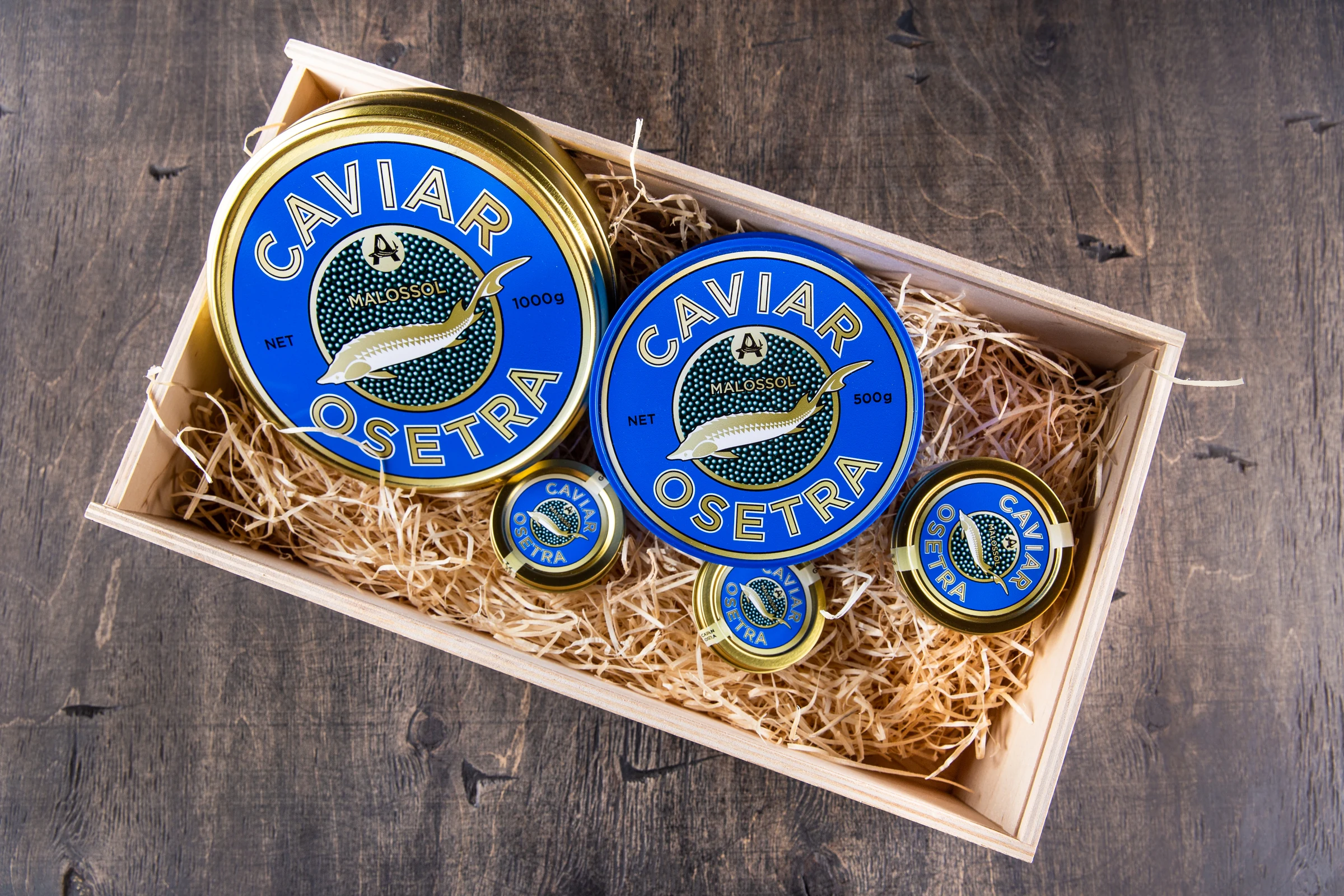
The front of a caviar tin tells you what caught your eye. The rest of the label helps you decide what you are buying, how to look after it and what to ask the seller. You do not need to memorise a long code to make a better purchase. You need to know which details answer which questions.
For a UAE customer, a useful reading order is the product and species, the ingredients, the net weight, the handling instructions, then the origin and batch information. Read them together. A grand name or an attractive photograph cannot answer all five.
The name identifies a starting point
Read past “caviar” to the variety and species. ANNA Dutch's Osetra page identifies Acipenser gueldenstaedtii; Beluga identifies Huso huso; Sevruga identifies Acipenser stellatus.[7][8][9] Species gives you a more precise identity than an evocative product name.
Names such as “Royal” are worth discussing with the seller, but they should not replace the species or product description in your decision. Ask what a particular selection means within that producer's range. Do not assume that a descriptive name has the same grading meaning everywhere.
If you are comparing tins, write down the actual product names rather than simply “black caviar”. That makes it easier to ask a clear question and to reorder something you enjoyed.
The ingredients tell you what has been added
The UAE pages for ANNA Dutch Osetra, Beluga and Sevruga list sturgeon eggs and sea salt as their ingredients.[7][8][9] The brand's farm page also describes its roe-and-salt approach without preservatives, stabilisers or borax.[2] For your purchase, read the ingredients on the actual product rather than relying only on a brand slogan.
An ingredient list is not a flavour review. It does not tell you how soft the pearls will feel, nor does a short list establish that one food is healthier or suitable for a particular diet. ANNA Dutch asks customers to check ingredients, allergens and dietary suitability before purchase or consumption.[17]
If someone at your table has a food allergy, ask about the whole serving, including bread, dairy and other accompaniments. Keep the packaging available so the product information is easy to check.
Net weight is the quantity you are buying
Compare the labelled weight of the contents, not the apparent size of the tin in a photograph. A product image can introduce the packaging beautifully while telling you little about how much caviar your chosen format contains.
Think about the role of the caviar before choosing a quantity. A small plain tasting and a garnish spread across several dishes are different purchases. Tell the UAE team how you intend to serve it, then confirm the weight and format in the order. A familiar-looking container is not a reliable substitute for that check.
Storage instructions deserve an early read
Read the product's date and storage directions before you decide when to order or where to keep it. The FDA's general food-storage advice specifically says to check label directions; it is not a product-specific shelf-life instruction for a tin of caviar.[15] Follow the instructions supplied with your ANNA Dutch product and ask the team if they are unclear.
Do not calculate a new expiry date from a website article, a harvest year or the day your delivery arrived. Opening also changes the question. ANNA Dutch's producer FAQ advises consuming caviar on the day the tin is opened.[6] Plan accordingly instead of buying a large format with the expectation that it will provide casual servings for days.
In the UAE, make the handover part of the plan. The delivery guidance says thermal packaging is not a substitute for refrigeration and asks recipients to refrigerate the product immediately.[17] Read the label while organising the delivery, not after leaving the bag on a kitchen counter.
Origin and batch information answer different questions
A fish species, a farm location, a processing location and a repacking location are not interchangeable descriptions. Ask which meaning is intended when a label or product page refers to an origin. Keep the batch information if you contact the seller about the product.
ANNA Dutch's farm page states that its jars and tins carry a batch code traceable to the farm, individual sturgeon and harvest date.[2] That is the brand's traceability statement; this guide does not decode or authenticate a particular customer's label.
What the longer caviar code is for
The US implementation of international caviar-labelling rules, reproduced in 50 CFR 23.71, describes a non-reusable label on the primary container. Its fields include a species code, source code, country of origin, harvest year, processing-plant code and lot identification. Repacked caviar has different year and plant fields.[21]
Those fields help explain why a caviar label may contain more than a familiar variety name. A harvest or repacking year is not an expiry date. This is a reading aid, not UAE customs advice, and the cited US regulation should not be used to decide whether you can carry a tin across a border.
Ask one precise question before buying
If something is missing or unclear, photograph the label and ask ANNA Dutch's UAE team about that specific detail. “Which species and weight is this?” or “Which storage instructions apply to this batch?” is more useful than asking whether a tin is simply good.
Browse the Osetra product information as a starting point, then check the product you receive. The label is a practical companion to the caviar, worth reading before the first spoonful.
Sources and further reading
- [2] ANNA Dutch UAE: The Farm
- [6] ANNA Dutch: Caviar storage FAQ
- [7] ANNA Dutch UAE: Osetra product details
- [8] ANNA Dutch UAE: Sevruga product details
- [9] ANNA Dutch UAE: Beluga product details
- [15] FDA: Are You Storing Food Safely?
- [17] ANNA Dutch UAE: Care, serving and delivery guidance
- [21] Caviar definition and labelling: 50 CFR 23.71 (Cornell LII)