In this article
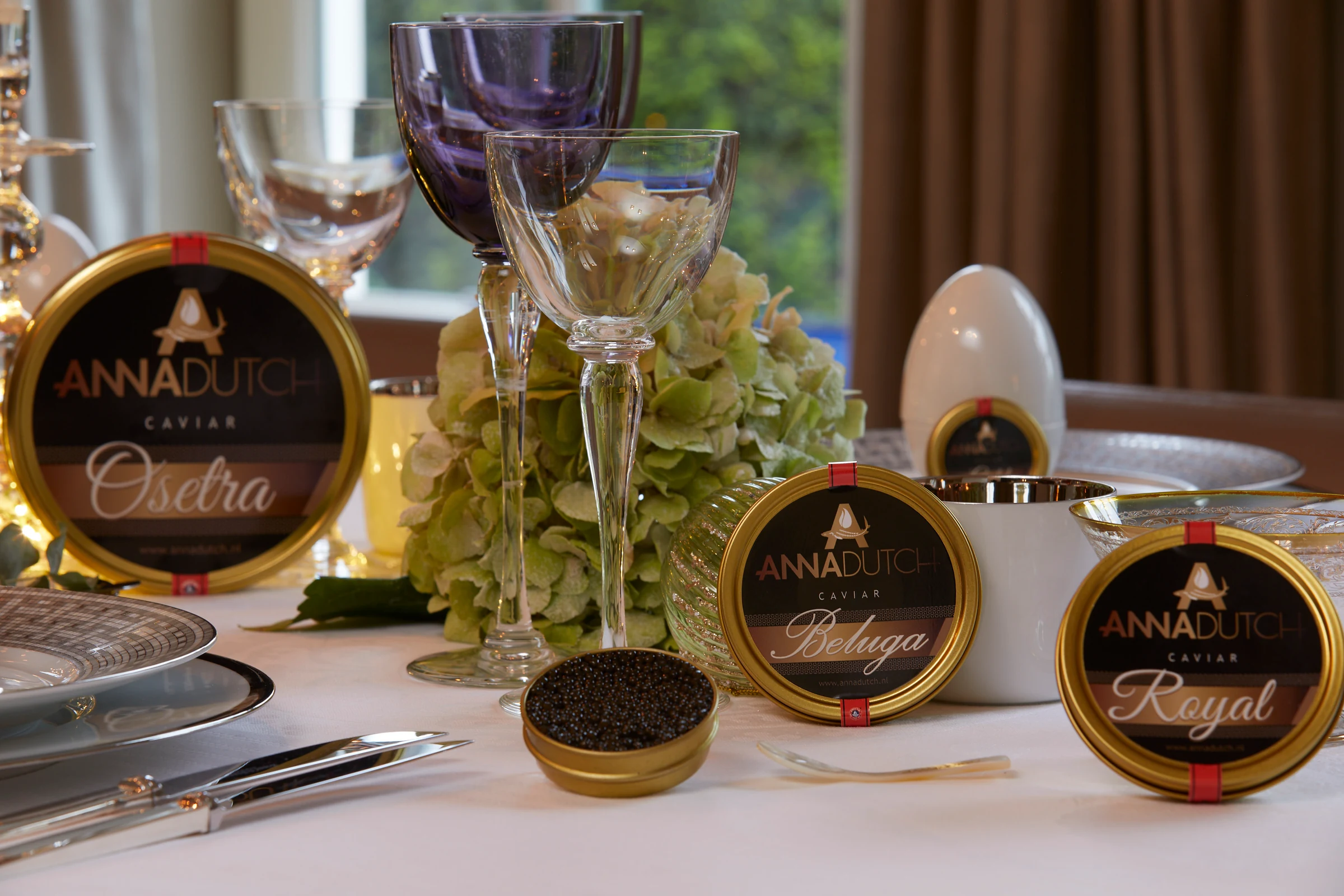
A caviar name is a useful starting point, but a poor substitute for knowing what you enjoy. Osetra, Beluga and Sevruga invite different comparisons: the texture of the pearls, the character described by the producer, and whether you want to eat the caviar on its own or make it part of a dish. Start there rather than with a prestige ranking.
For a UAE purchase, there is also a practical question: can the chosen variety and size be confirmed for your occasion? ANNA Dutch recommends checking availability before planning a special event.[17] Choose the experience first, then confirm the order.
Start with species, not a hierarchy
ANNA Dutch's UAE collection identifies Osetra as Acipenser gueldenstaedtii, Beluga as Huso huso, and Sevruga as Acipenser stellatus.[7][8][9] These are different sturgeons, not simply three quality grades of the same product. The species name is worth reading alongside the familiar name on the front of the tin.
The comparisons below use ANNA Dutch's own product descriptions. They are a guide to choosing within this collection, not a promise that every producer's caviar or every batch will taste identical. The UAE site's product guidance notes that roe size, colour, texture and flavour can vary naturally.[17]
Osetra: choose it for a nutty, creamy profile
The ANNA Dutch Osetra description emphasises an almost nutty taste, with creamy notes. It lists dark olive to dark brown pearls and a size range of 3.2–3.5 mm.[7] Those details give you something more useful to consider than whether a tin looks sufficiently dark or expensive.
Osetra is the place we would suggest starting if the words “nutty” and “creamy” appeal to you. Make the first bite plain. If you then add an accompaniment, keep it quiet enough that you can still recognise what drew you to the caviar: a little potato or plain toast is a more revealing starting point than a heavily seasoned canapé.
When buying a second tin after an enjoyable first one, note what you liked. Was it the softness, the finish, or the way the caviar worked with a particular food? A preference you can describe is more helpful than remembering only the name.
Beluga: pay attention to the larger, softer eggs
The Beluga product page describes large, soft eggs and lists a pearl size of 4 mm.[9] If texture is what interests you most, this gives you a reason to enquire about Beluga that has nothing to do with buying the most prestigious name.
We would give a texture-led choice a simple setting. Taste it separately before deciding whether to place it on an accompaniment, and avoid burying the pearls under an elaborate garnish. You are buying the caviar to notice it.
The product page is not a complete prediction of a particular tin's flavour. Ask the UAE team for guidance on the batch and format being offered, especially if you are comparing it with an Osetra you already know. There is no need to turn one preference into a verdict about which variety everybody ought to enjoy.
Sevruga: a smaller-grained alternative
The Sevruga description presents smaller, fine-grained eggs and a pronounced salt-sea character; its listed pearl range is 2.2–2.5 mm.[8] Treat that description as the producer's tasting guidance, rather than as a measured salt-content comparison with the other varieties.
Consider Sevruga if you would like to explore a smaller-grained caviar or if a more assertive marine description sounds appealing. Keep your first comparison simple: the same plain accompaniment, the same small tasting portion, and time to notice texture as well as flavour. Changing the garnish with every variety makes it harder to work out what you actually prefer.
Choose for the meal you are planning
For a first purchase, choose one variety whose description appeals to you. For a comparison, decide what you want to learn: perhaps the feel of smaller versus larger pearls, rather than a competition to identify a winner. If the caviar will top a dish, choose the dish first and keep its strongest seasonings separate.
For a gift, ask about the recipient's preferences and their ability to receive and refrigerate it. For a dinner with a fixed date, confirm the product and delivery arrangements before printing a menu. These choices matter more than assembling an impressive-sounding list of varieties.
Before you order in the UAE
Enquire about the exact variety, net weight, format and timing you need through ANNA Dutch's UAE team. Do not assume that a product page means a particular tin is ready for immediate delivery. The site's guidance makes order acceptance dependent on availability and confirmed delivery details.[17]
Follow the instructions supplied with your product. ANNA Dutch's UAE serving advice is to keep caviar refrigerated until serving and serve it chilled, ideally over ice.[17] For planning the evening around your chosen tin, the Journal's home-tasting guide covers the table and handover details.
The worthwhile purchase is the one you want to taste again. Use the names to narrow your choice, then let your own preference do the rest.